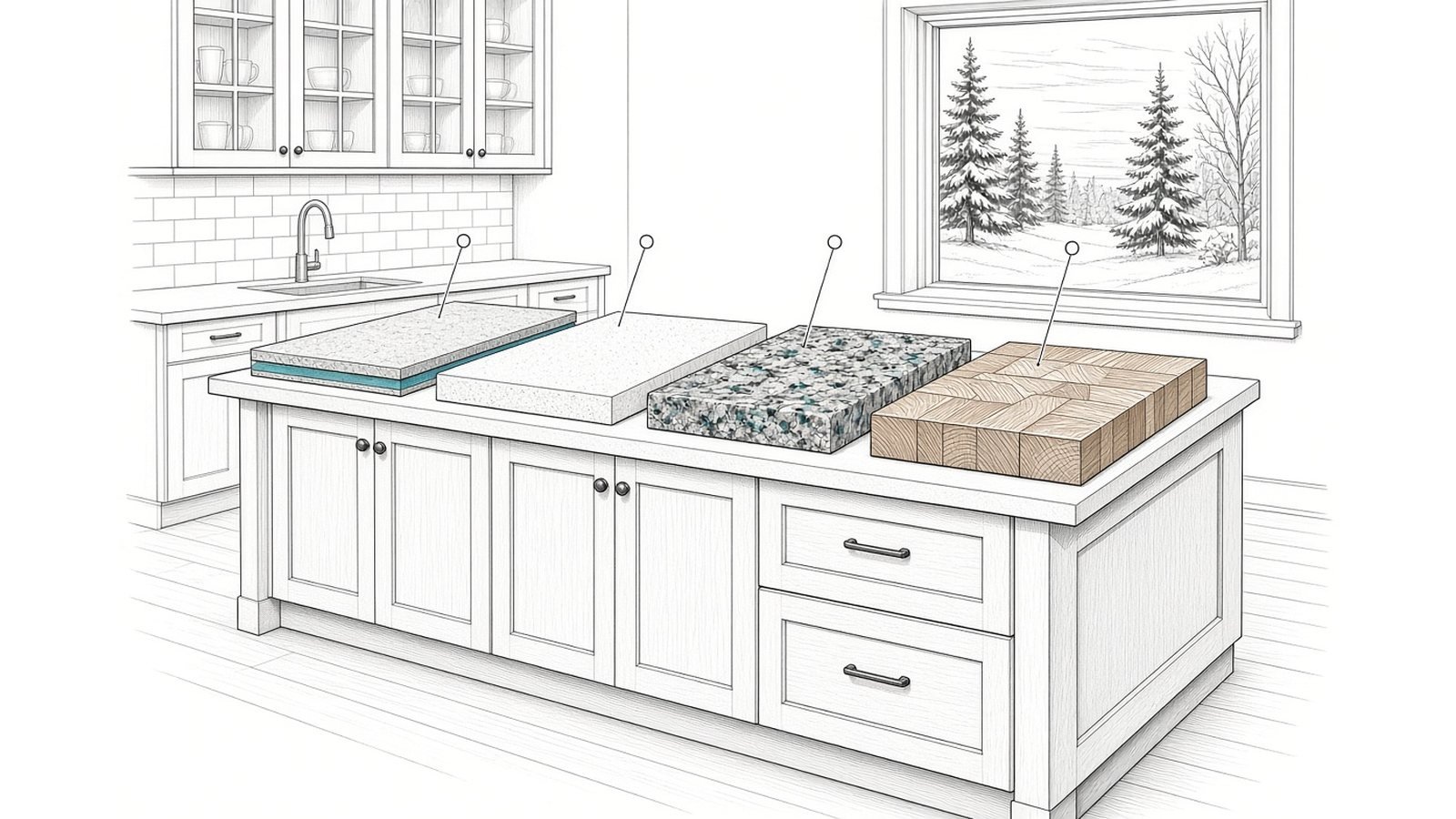
Countertops are one of the few renovation items where the material choice changes the price by a factor of five. The good news is the decision is simpler than the showrooms make it look. Four materials cover almost every Canadian kitchen: laminate, quartz, granite, and butcher block. Each has a clear job it does well, and the install process matters as much as the slab, because a bad seam or a sloppy sink cutout will bother you every single day.
The four main materials and what they cost
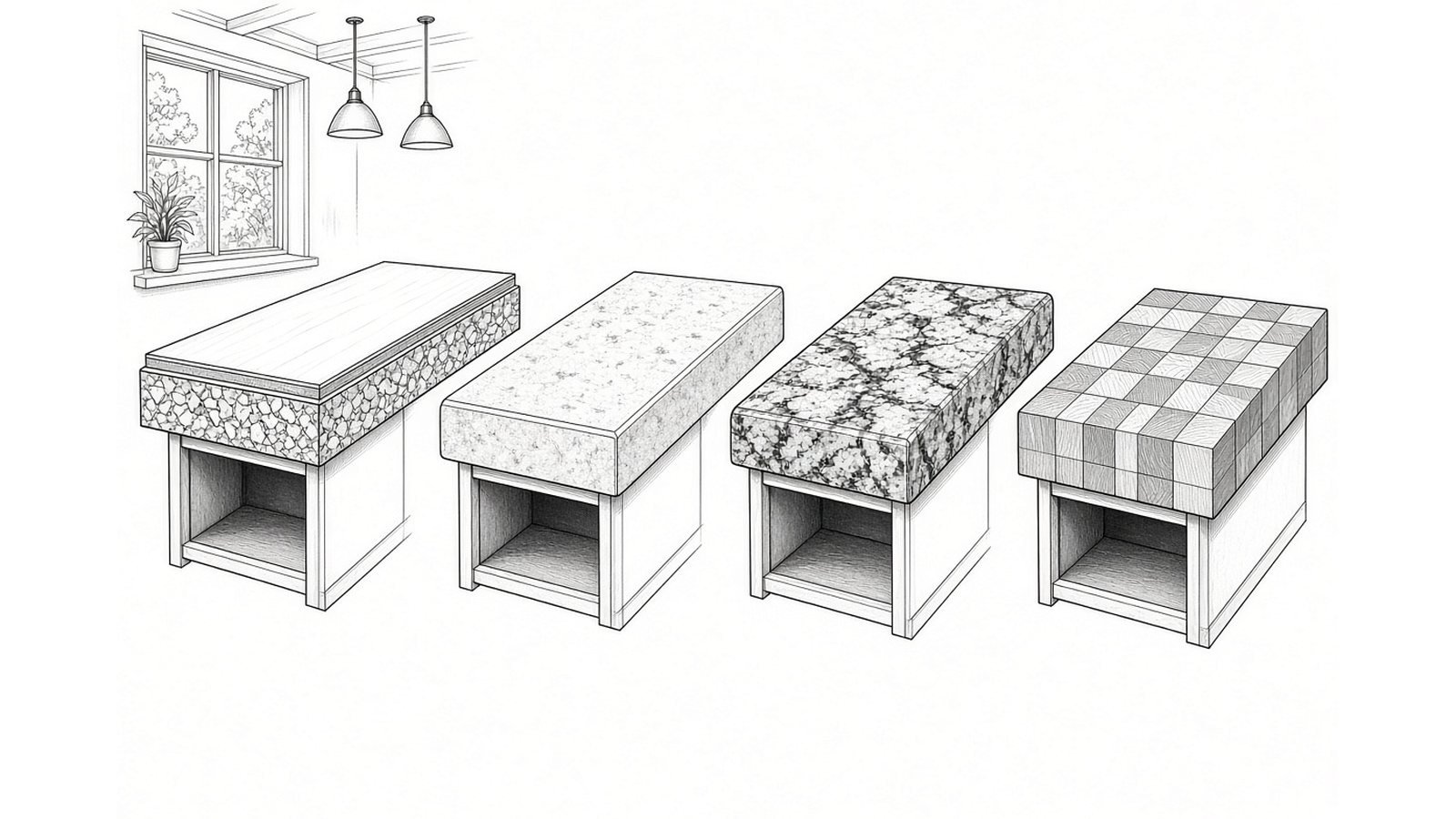
Laminate runs about $20 to $60 per square foot installed. Modern laminate looks far better than what was in your parents' kitchen, but edges and seams are its weak point, and water getting into a seam swells the substrate. Quartz runs roughly $80 to $150 per square foot installed. It is engineered stone, consistent in pattern, non-porous, and needs no sealing, which is why it dominates new kitchens. Its one real weakness is heat: a hot pan straight off the burner can scorch the resin.
Granite runs about $70 to $140 per square foot installed. Every slab is unique, it handles heat well, and it needs periodic sealing, usually once a year with a wipe-on product. Butcher block runs $40 to $100 per square foot and gives you a warm look at a fair price, but it needs oiling several times a year and will mark and stain around the sink if you let water sit. All of these are typical ranges; exotic slabs, thick edges, and complicated layouts push higher.
Templating: why nobody cuts anything on day one
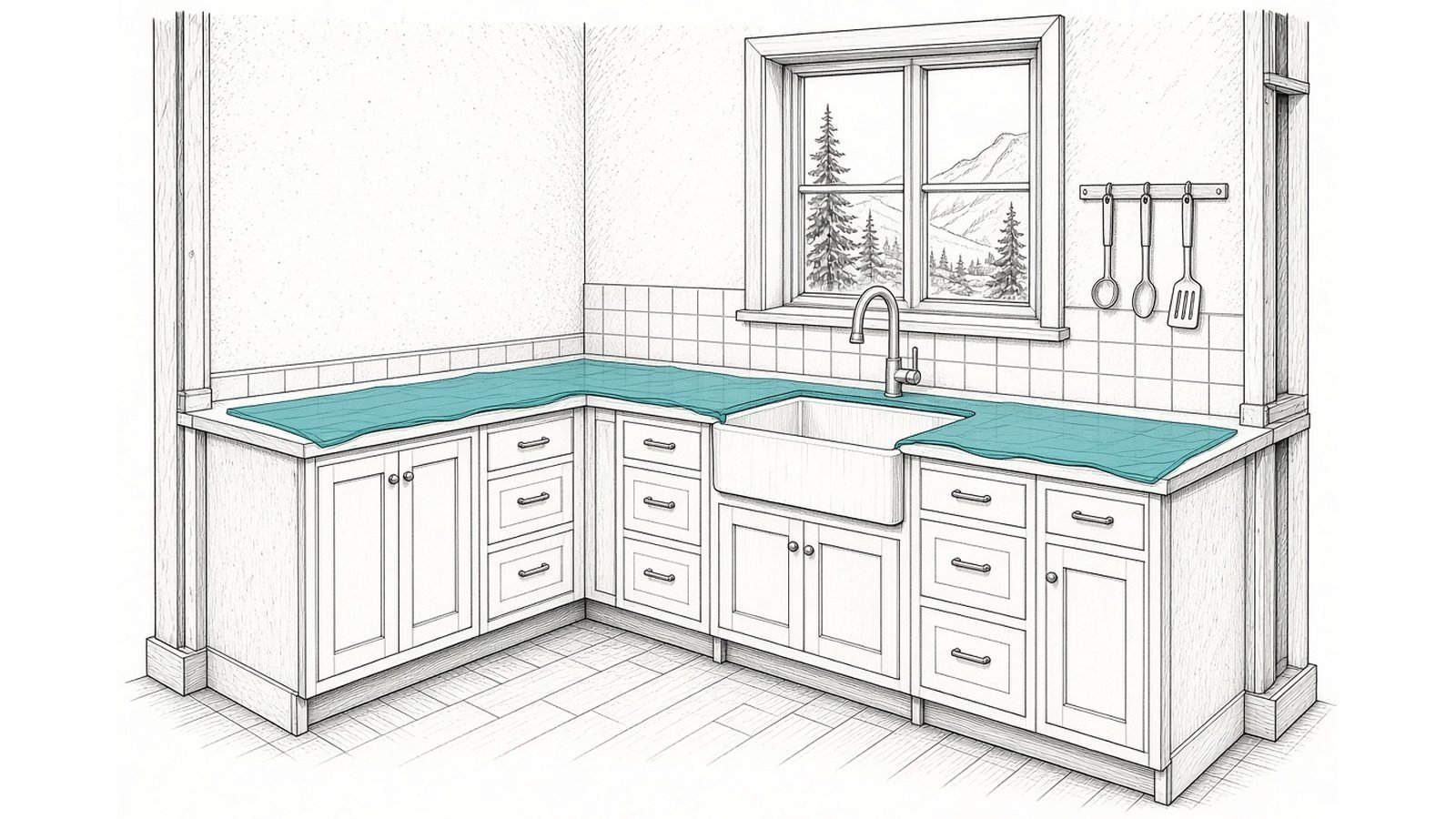
For stone and quartz, the fabricator comes out and templates after your cabinets are installed, level, and final. They build a precise digital or physical pattern of the exact layout, including sink position, faucet holes, and overhangs. Then the slab is cut at the shop, and install happens one to two weeks later. This is the part that surprises people on scheduling: you will live without countertops, and often without a kitchen sink, for that gap. Plan for it. Do not let anyone template before the cabinets are permanently fixed, because a cabinet that shifts even a few millimetres afterward means a countertop that does not fit.
Seams and sink cutouts
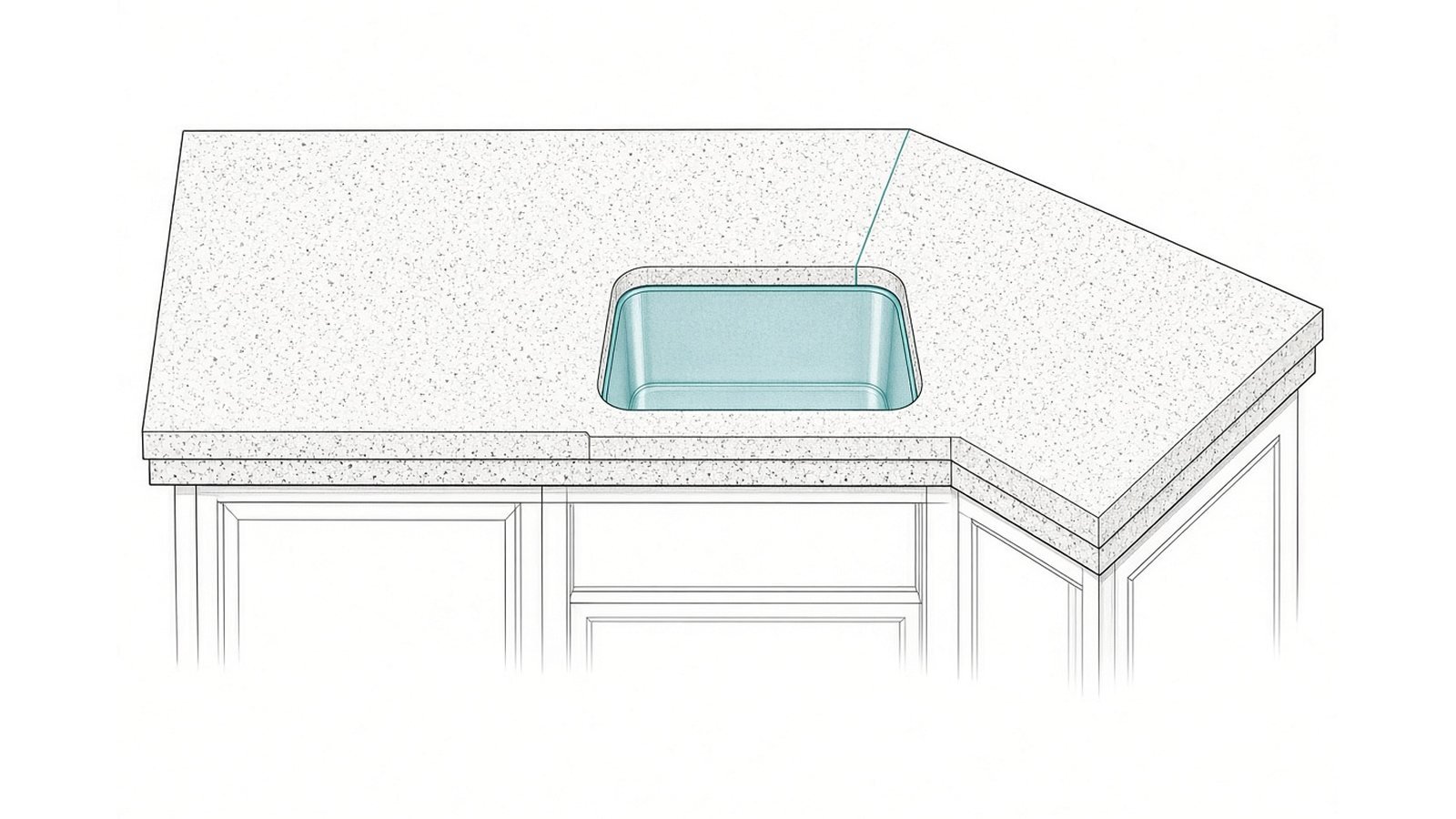
Slabs come in limited sizes, so most kitchens over about 10 feet of continuous run will have at least one seam. A good fabricator plans seams in low-visibility spots, away from the sink, and gets them tight and colour-matched. Ask where the seams will go before you sign, and get it on the drawing. For sinks, undermount is standard with quartz and granite and adds a cutout and polishing charge, typically $200 to $500. Laminate generally takes a drop-in sink. Confirm who supplies and who mounts the sink, because fabricators mount undermounts to the stone but usually leave plumbing hookup to you or your plumber.
What surprises people
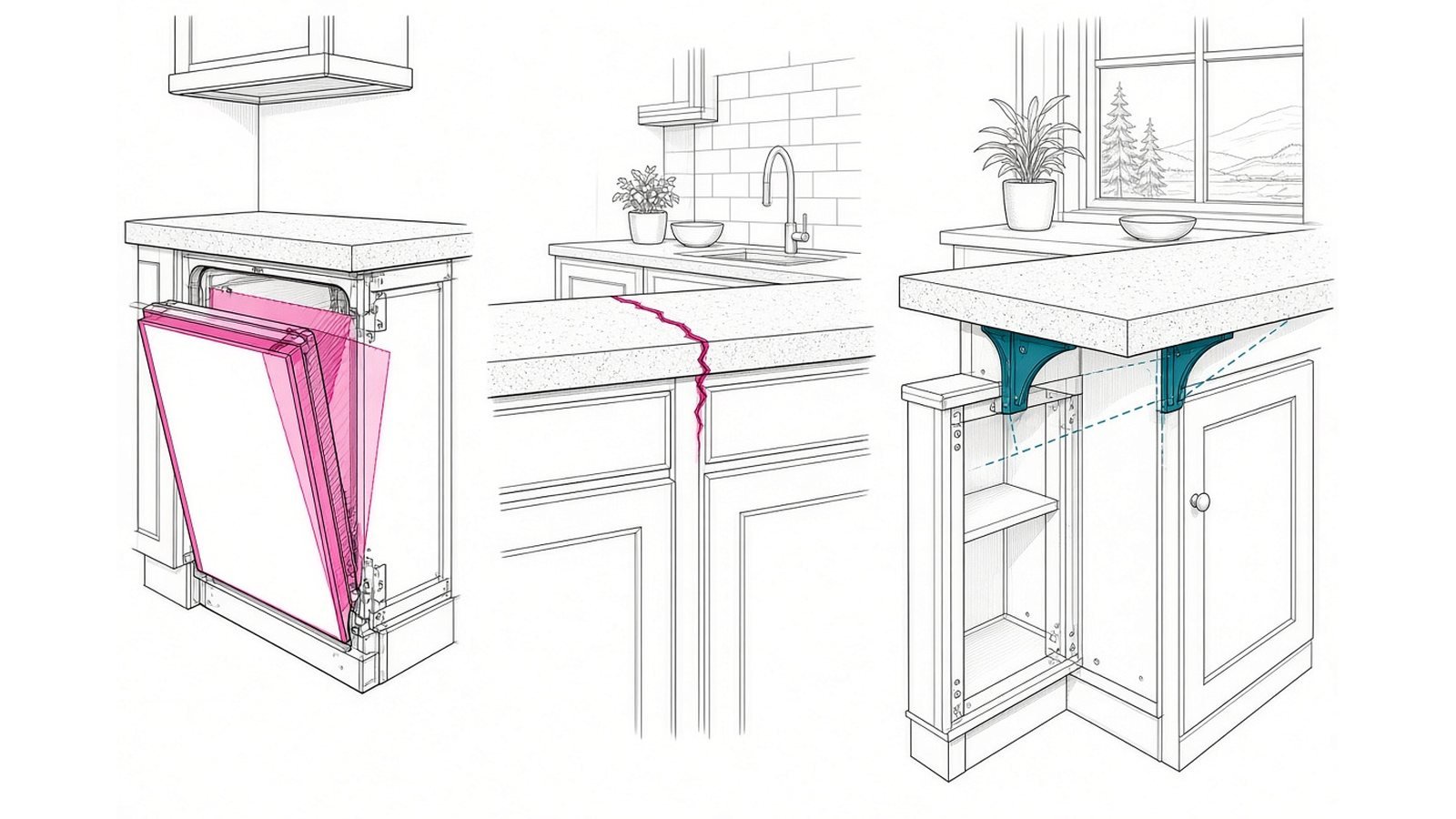
The quoted per-square-foot price is rarely the final number. Cutouts, edge profiles, backsplashes, tear-out of the old top, and plumbing disconnect and reconnect all add line items. Old countertops coming off can also reveal problems: cabinets out of level, walls out of square, or a dishwasher that was holding the old top up. In older Canadian houses, out-of-square walls are normal, and a good installer scribes to the wall or uses a backsplash to cover the gap. Also expect to be without a working sink for a few days to two weeks between tear-out and install.
Hiring a countertop fabricator
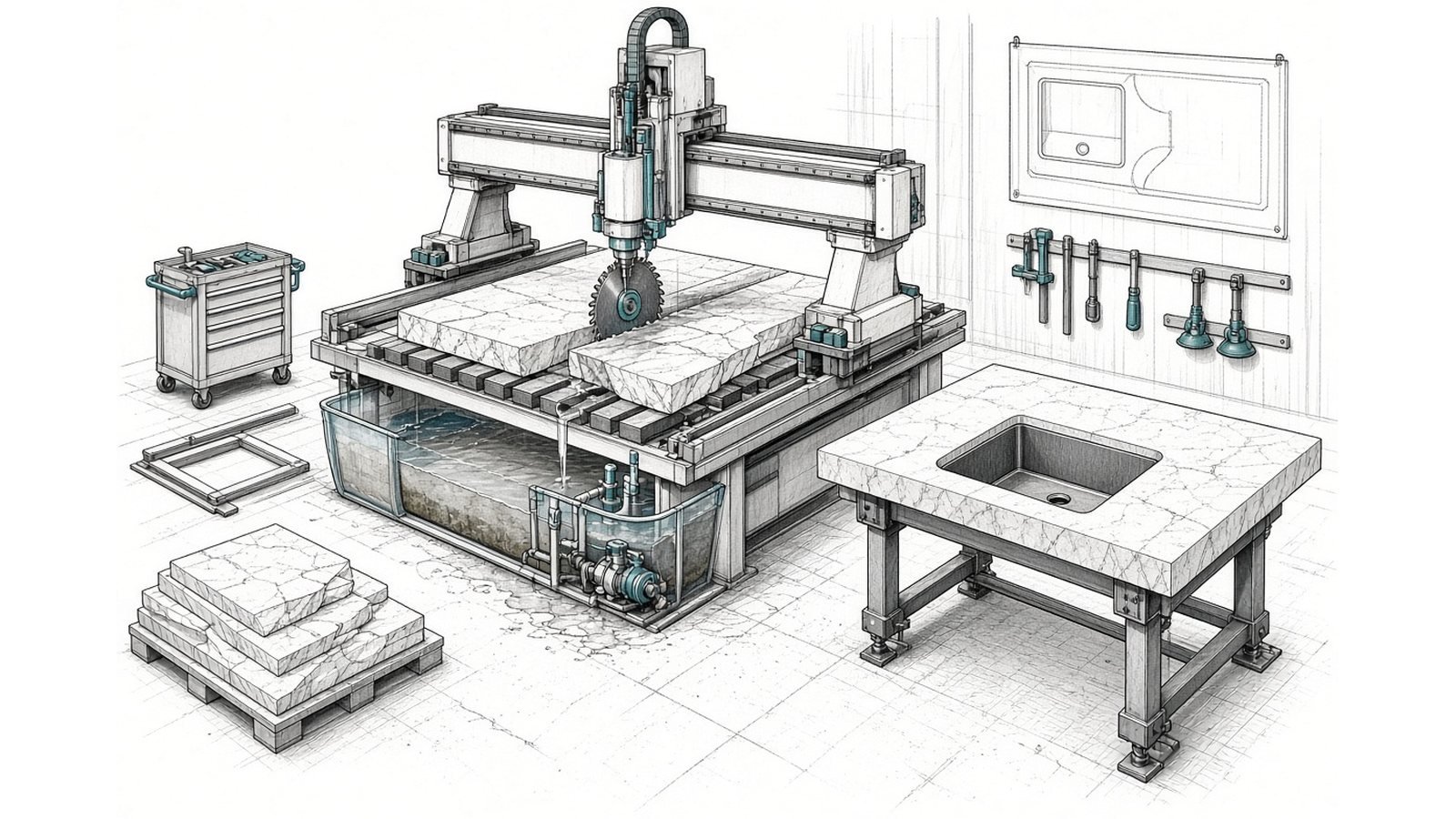
Get three quotes on the same drawing with the same material and edge profile, otherwise you are comparing apples to oranges. A good fabricator visits or templates before committing to a final price, shows you the actual slab you are buying (not just a sample chip) for granite, tells you where seams will land, and puts cutouts and tear-out in writing. Ask how they handle a crack during install, what their lead time is from template to install, and whether reconnecting plumbing is included or excluded. Vague answers on any of those are your cue to move on.